
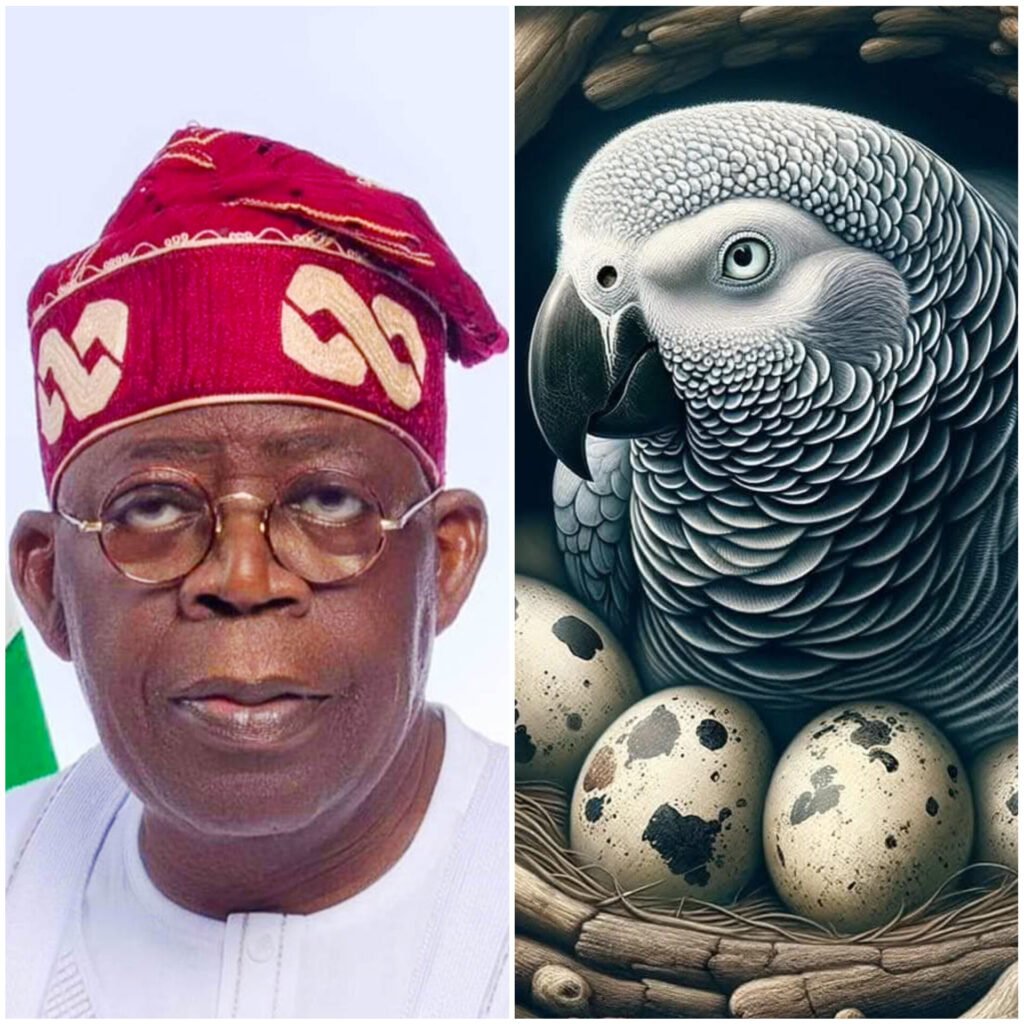
The Yoruba political tradition has long been associated with intellectual engagement, political activism, and resistance to authoritarianism. From the constitutional sophistication of the old Oyo Empire to the democratic struggles of modern Nigeria, the Southwest has cultivated a reputation for questioning power rather than worshipping it. That reputation now raises an important national question: how do the Yoruba truly view the administration of President Bola Ahmed Tinubu?
The answer is neither simple nor uniform.
Historically, Yoruba political culture has never been one of blind loyalty. In the old Oyo Empire, the Alaafin, though powerful, was not above accountability. The Oyomesi — the kingmakers and custodians of public morality — possessed the authority to check excesses of the throne.
When the conduct of an Alaafin was considered repugnant, or his reign brought repeated bad fortune, custom required the Oyomesi, led by the Bashorun, to present him with a calabash containing parrot eggs. Delivered at night, the message was called “a gbe were ri,” (We have rejected you). That symbolic presentation was not merely ritualistic; it reflected a deep philosophical belief that leadership existed for the well-being of the people, not for personal glorification. An Alaafin so presented was expected to drink poison or hang himself to make the throne vacant.
Few other cultures worldwide are known to have had such a powerful antidote to misrule.
During the crises of the First Republic, many in the old Western Region fiercely resisted perceived federal interference in regional politics. The “Operation Wetie” era remains controversial because of its extreme violence, but it also underscored how passionately the region reacted to perceived injustice and political manipulation.
Under military rule, Yoruba figures stood prominently at the forefront of pro-democracy struggles. Fela Kuti weaponized music against dictatorship. Gani Fawehinmi fought tyranny through the courts. Beko Ransome-Kuti mobilized civil resistance in the streets. Following the annulment of the June 12, 1993 election believed to have been won by Moshood Kashimawo Olawale Abiola, the Yoruba-led democratic agitation within National Democratic Coalition became central to the eventual collapse of military rule.
Against that historical backdrop, it is understandable why many observers expect the Yoruba public to hold President Bola Ahmed Tinubu to especially high standards. And why some are calling out the Yoruba for suddenly “going mute” under a collapsing presidency led by one of their own.
Yet evaluating public opinion today requires caution. Nigeria is deeply polarized, and discussions around Tinubu’s presidency are often shaped by ethnicity, party affiliation, economic hardship, and media narratives. While critics portray the administration as disappointing or even disastrous, supporters insist that many of the painful reforms currently underway were long overdue and necessary to rescue the country from years of fiscal irresponsibility.
There is no doubt that the Tinubu administration faces enormous public dissatisfaction. Inflation, rising fuel prices, currency instability, and declining purchasing power have created severe hardship for millions of Nigerians. Across ethnic and regional lines, frustration is widespread. Many citizens who enthusiastically supported the president in 2023 now openly express disappointment over the harsh realities of his economic reforms.
Among Yorubas, opinions about Tinubu mirror the broader divisions within Nigeria itself. There remains a strong base of loyalists who see him as a master political strategist attempting difficult but necessary restructuring of the economy. For these supporters, subsidy removal and currency reforms, though painful, are measures previous administrations avoided out of political cowardice.
At the same time, many Yoruba intellectuals, activists, clerics, columnists, and ordinary citizens have become increasingly vocal in criticizing the administration. Voices such as Dele Farotimi, Omoyele Sowore, David Hundeyin, Rufai Oseni, Seun Okinbaloye, Suyi Ayodele, Olusola Badero, Justice Faloye, Festus Adebayo, Segun Olatunji, Abimbola Adelakin, and Late Ayo Olutokun have sustained fierce opposition to the president, often questioning both his policies and personal history. Former President Olusegun Obasanjo has also repeatedly voiced his preference for Peter Obi (an Igbo), emphasizing competence and integrity over ethnic considerations in national leadership.
All these are Yoruba. Elite Yoruba. They hold their opinions fiercely and publicly, despite sharing ethnicity with Tinubu. If this many who hold a microphone are screaming “danger” at the top of their voices, imagine the many others who are voiceless.
Surely, Tinubu, as we now know him, neither represents the finest nor the mainstream of Yoruba leadership worldview. At best, he represents a shrinking demographic sustained by patronage and the shame of admitting failure. Some even think he is damaging the group’s persona, once carefully cultivated by the disciplined exemplary leadership of Chief Obafemi Awolowo.
Politically, the Southwest itself is far from monolithic. While Lagos remains the symbolic center of Tinubu’s political influence, most people would secretly admit that in a free and fair election the president and his acolytes stand no chance.
Electoral outcomes across the rest of the region have shown fluctuating loyalties over the years. Oyo and Osun have frequently leaned toward PDP, while Ondo and Ekiti have historically oscillated between political camps depending on prevailing circumstances and local dynamics. Sometimes it is the old Labor Party, at other timesSDP or PDP, and yet at other times APC. This suggests that Yoruba voters, like many others, are often pragmatic rather than permanently ideological.
So, reducing complex political realities into simplistic ethnic assumptions is lazy. To say “the Yorubas support Tinubu” as though millions of people think with one mind oversimplifies both Yoruba political culture and Nigerian democracy itself. No ethnic group is politically homogeneous. There are Yorubas who passionately defend Tinubu, Yorubas who bitterly oppose him, and many others who simply want better governance regardless of who occupies Aso Rock.
Indeed, one of the enduring strengths of Yoruba political thought has been its willingness to criticize “its own” when necessary. The same political culture that produced fierce defenders of democracy also produced intense internal debates, ideological rivalries, and robust dissent. Ethnic solidarity has never completely erased political disagreement in the Southwest.
Ultimately, the more important question may not be whether Yorubas support Tinubu, but whether Nigerians across all regions can rebuild a political culture that prioritizes accountability and overrules ethnic or party loyalty.
Democracies weaken when leaders are judged primarily through tribal lenses — whether positively or negatively. They mature when citizens assess governments by competence, justice, transparency, and the tangible welfare of the people.
President Tinubu’s administration will continue to be judged, not merely by loyal supporters or angry critics, but by the daily realities Nigerians experience in their homes, markets, schools, hospitals and streets. And on that verdict, no demographic I know of — Yoruba included — is speaking kindly at the moment.
Indeed, if 2026 Nigeria was the old Oyo Empire, perhaps the Oyomesi would by now be preparing the sacred calabash for onward delivery. God save the Alaafin! Sorry, I mean the Jagaban.
About the author
‘Dare Oladimeji sent in this article from Akure, Ondo State.
