
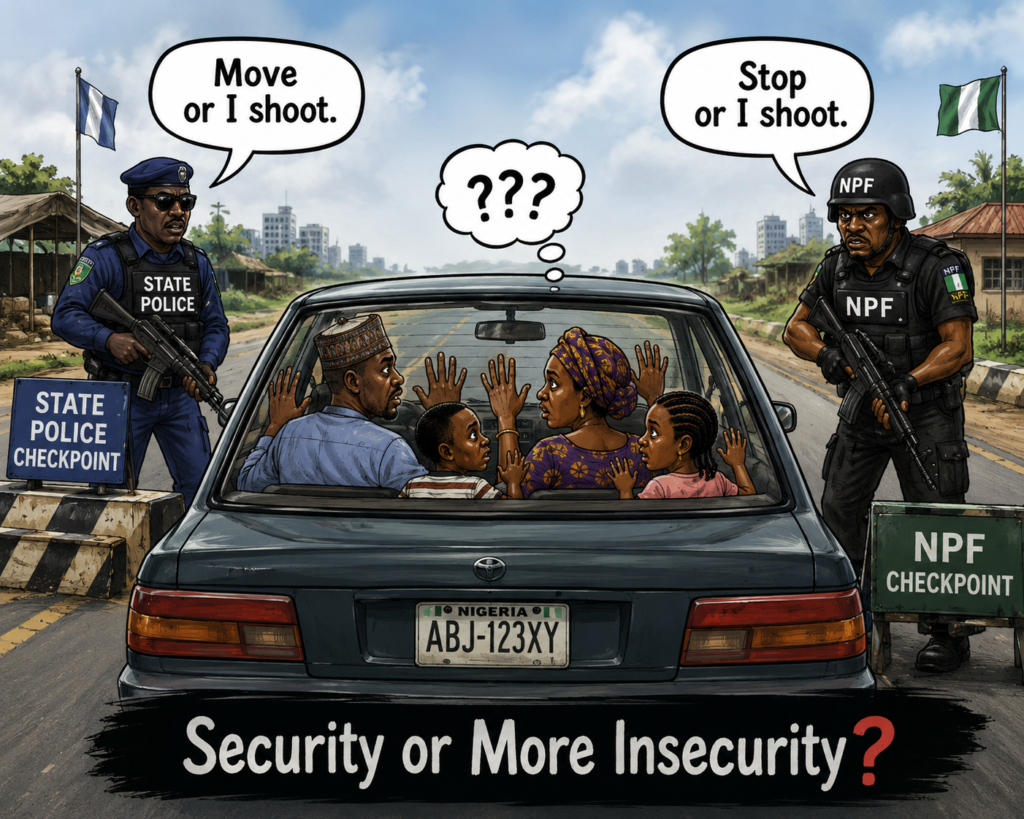
The introduction of parallel state police formations alongside that of the Federal Government appears to be a done deal, following the current efforts by the National Assembly to amend the relevant sections of the Constitution dealing with the Police.
After years of prevarication on the issue, with some in support and others less than enthusiastic, a majority of governors under the Nigerian Governors Forum have suddenly endorsed the immediate creation of state police, which will be under their direct command.
In explaining their inability to effectively tackle insecurity in their domains, governors have always maintained that they are merely nominal chief security officers of their states, lacking the powers to direct either the Commissioners of Police or Army Commanders posted there.
Now, with the looming birth of state police, they can truly assert their authority as chief security officers within their territories. How this arrangement will work alongside the Nigerian Police Force in the states is something the lawmakers must have considered in drafting the enabling legislation.
But let it be said that many perceptive compatriots, including this writer, are far from excited by the prospect of state police. The dangers ahead seem to be benignly ignored.
To begin with, the argument that insecurity will automatically be better tackled under state police is a non sequitur. The worst cases of banditry, kidnapping for ransom, and the forceful takeover of homes and farmlands by criminals are in the Northern Region, where various forms of local policing have existed for decades.
The notorious misuse of these Dandukas, even before Independence, is well known. To suggest, therefore, that state police is the panacea to the nation’s insecurity is neither here nor there.
Secondly, the question of proper funding, equipping, and maintenance of state police by state governments deserves serious consideration.
States that treat the payment of salaries and pensions with whimsical disregard will be riding the tiger if they extend such practices to their police formations.
Delayed remuneration for armed men and women may well invite greater harassment and extortion of ordinary citizens, as more roadblocks and checkpoints are brazenly mounted to collect unofficial “tolls.”
Those entrusted with arms to fight crime may themselves be tempted into criminal conduct if poor remuneration, compounded by irregular payment, leaves them unable to cater for their families.
Nigerian citizens are already burdened by this reality under the federal police structure. It would amount to double jeopardy if state police formations were to add to this ignominy.
Another dubious argument advanced by advocates of state police is that locally recruited officers possess a better knowledge of the terrains in which they serve.
Unless such officers are permanently stationed in and around their native communities, one struggles to see the difference when they are transferred to other parts of their states where they are equally unfamiliar with the environment.
They may share a common language with the people. Granted. But pray, what is the language of crime?
One also finds it intriguing that governors who had long demurred and prevaricated over state police suddenly became converts after trooping into the APC, the ruling party.
The haste to get the matter concluded ahead of the fast-approaching general elections, in which the President is also a contestant, gives cause for concern, especially as most of the governors belong to the President’s political party.
In an election many envisage as a potential game changer, the frenetic zeal to establish state police alongside the Nigerian Police Force, which remains under the command of the President, demands firm assurances of fairness, transparency, and professionalism from the men and women in uniform.
Otherwise, Nigeria may descend into an even worse state of insecurity than it presently faces—a case, perhaps, of selling a dog to buy a monkey.
Mazi Nnamdi Nwigwe, a veteran journalist, writes from Owerri.
