A few months ago, somewhere in eastern Nigeria, I sat with an old man who had outlived three wars, two currency collapses, four constitutions, and the slow disappearance of nearly everything he had once recognised as his country. He was not learned in the formal sense, but he had the unusual stillness that life sometimes deposits in those who have watched too many things end. Halfway through our conversation, he set down his cup and offered me a sentence I have not been able to put down since.
“My son, when the bush is about to catch fire, the birds do not sing the loudest. They go quiet. The noise you hear before a great fire is not from the birds. It is from the wind.”
I left that encounter with a chill I have still not fully shaken. Because everywhere I look in the world today, I hear the wind. And I no longer hear the birds.
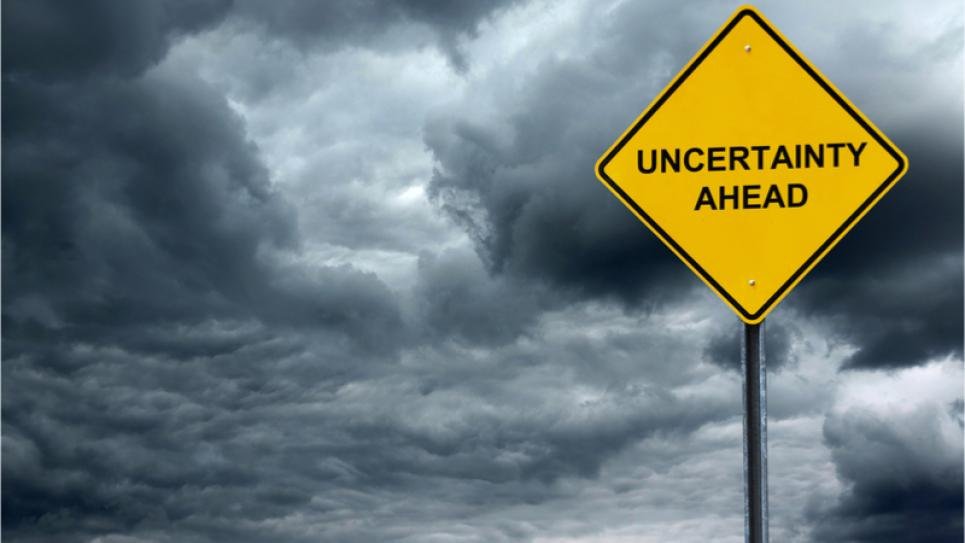
There are moments in the long arc of human experience when the surface of life grows loudest precisely because something beneath it has begun to give way. We are inside such a moment. The volume of contemporary existence has reached a pitch that no longer corresponds to any felt sense of stability. Announcements of progress arrive every hour. Innovations are unveiled before the previous ones have been understood.
Markets are described as healthy in the same breath as central banks confess they no longer recognise the terrain. Leaders speak the language of certainty in tones that betray a private terror. The noise has detached itself from the ground beneath it, and when noise outruns ground, it is rarely a sign of flourishing. It is the audible tremor of a structure no longer certain of what is holding it up.
Every dimension of human activity now moves at a velocity that exceeds the human capacity to absorb it. Consider the small things first, because the small things tell the truer story. A young professional in Lagos checks her phone in the morning and is asked, before breakfast, to hold opinions on a war in one continent, a famine in another, a banking crisis on a third, an election scandal somewhere she has never been, and the latest pronouncements of a technology that may or may not soon take her job. She has not yet brushed her teeth. By the time she arrives at the office, she has been emotionally taxed by ten countries, three industries, and two existential threats.
This is not information. This is not awareness. This is a nervous system under siege. Multiply her by a billion, and you begin to see why the human species feels, collectively, like it has not slept well in years.
Institutions that once moved with the patience of geology now lurch with the impatience of adolescents. Universities, banks, parliaments, churches, professional bodies, all of them designed for a world in which change arrived in decades, are being asked to metabolise change that arrives in weeks. They cannot. So they perform competence while haemorrhaging credibility.
Anyone who has sat in a senior meeting in almost any institution in the world over the past three years knows the particular flavour of this performance. The slides are confident. The strategy documents are elegant. The press releases are polished. And underneath, everyone in the room knows that the ground is shifting in ways the strategy may not address.
They simply lack the vocabulary, or the permission, to say so out loud.
The geopolitical layer makes the unease more concrete. The post-1945 settlement that organised the world for three generations is quietly dissolving, and nothing has been agreed to replace it. The dollar’s slow dethroning is not loud, but it is happening in the small print of bilateral trade agreements between countries that would not have imagined such arrangements a decade ago.
The Red Sea is not the Red Sea it was in 2019. The Sahel is no longer the Sahel of the old maps. Taiwan is now a sentence that ends most strategic conversations in Washington and Beijing. Europe has rediscovered, with some shock, that history did not in fact end, and that the long peace was a parenthesis rather than a destination. Africa is being courted by four civilisations at once, each offering a different future, and the continent has not yet decided which of them, if any, it intends to accept.
The old certainties are not being argued with. They are being quietly stepped around, like a piece of furniture everyone has agreed not to mention.
What troubles the careful observer is not the volatility alone but the peculiar quality of cheer that accompanies it. Whole societies are speaking in the cadence of advancement while moving with the gait of exhaustion. The discourse of growth has rarely been louder, yet the evidentiary base for it has rarely been thinner. Productivity rises while meaning collapses.
Connectivity expands while loneliness deepens. Knowledge accumulates while discernment retreats. Life expectancy stalls in the wealthiest nations on earth.
Birth rates fall below replacement across most of the developed world and increasingly the developing one. Young people in countries that have never been richer report levels of despair that would have been unthinkable to their grandparents who had nothing. The headline indicators flatter the moment.
The deeper indicators, the ones that measure trust, cohesion, attention, civic patience, the human capacity for sustained thought, are quietly emptying. When a civilisation’s loudest signals contradict its quietest ones, the quiet signals are almost always the truer reading.
There is, beneath all of this, a chill that has not yet been named in the public vocabulary. It is the sensation that history is preparing something, and that the preparation is not benign. It moves through the small things first. The strange brittleness of conversations that should have been easy. The unexplainable fatigue inside institutions that still appear functional. The way crises now arrive in clusters rather than in sequence, so that a pandemic blurs into a war which blurs into an inflation shock which blurs into a banking tremor which blurs into a technological rupture, until the citizen can no longer tell where one ended and the next began. The way the future has begun to feel less like a horizon and more like a verdict. Those trained to read fracture early recognise the pattern. Systems do not collapse from their loudest stresses. They collapse from the accumulated weight of stresses that were never permitted to be spoken aloud.
The deeper concern is structural rather than episodic. The instruments humanity now wields, economic, technological, ecological, informational, have grown faster than the moral and institutional architectures meant to steady them.
We have produced a civilisation whose tools have outpaced its temperament. A teenager in any city on earth now carries in her pocket a device that gives her access to more information than every library in Alexandria combined, and the cumulative effect on her inner life is not enlightenment but a low, persistent dread she cannot name.
A handful of laboratories in three countries are building systems whose long-term behaviour they openly admit they cannot predict, and the response of the global order has been to ask them to please be careful. Ecosystems older than recorded history are being dismantled in single financial quarters to satisfy projections that no one in the boardroom genuinely believes.
This is the classical precondition of every great unravelling in the human record. It is not the absence of capability that brings civilisations down. It is the absence of proportion between capability and wisdom.
The spiritual layer is where the chill becomes most personal, and where most contemporary discourse refuses to look. Beneath every visible fracture in the modern world sits an older fracture, one that no policy paper will name. The human person has been quietly stripped of the inner architecture that once made volatility bearable. Previous generations endured wars, plagues, famines, and dislocations that would shatter the modern psyche, and they endured them because they possessed an inner scaffolding the contemporary world has not figured out how to replace. They had faith, or community, or ritual, or a story about what their suffering was for. The modern citizen, by and large, has none of these. He has notifications. He has content. He has opinions. He has access to everything and belonging to nothing.
When the tremors come, and they are coming, he will face them without the inner resources that allowed his great-grandfather to survive worse. A civilisation whose people have been hollowed out cannot withstand pressure, no matter how impressive its technology or how sophisticated its markets.
Anthropologically, what we are watching is the slow uncoupling of the human being from the structures that historically made him human. Family is no longer a given. Place is no longer a given. Vocation is no longer a given. Faith is no longer a given. Even the body, the most ancient of all human anchors, is now optional terrain.
Each of these uncouplings was sold as a liberation, and each of them carried a real liberation within it. But the cumulative effect, the existential bill that none of the reformers thought to calculate, is now arriving. The unmoored self, free of every inherited weight, turns out to be not lighter but more anxious, not freer but more afraid. The species has never lived this way before. We are, in a sense the brochures never mentioned, running a global experiment on what happens to human beings when you remove almost everything that previous human beings would have recognised as the conditions of a life.
The air, as the old man might have said, is thick with the imminence of something tectonic. Tectonic is the correct register. What is approaching is not a single event but a rearrangement. A shift in the plates beneath the human story, economic, geopolitical, technological, ecological, spiritual, moving simultaneously, slowly, and with a quietness that disguises their force. Such shifts are rarely announced.
They are felt first as unease, then as disorientation, then as the sudden recognition that the world one was inhabiting yesterday is no longer the world one is standing in today. We may be in the unease phase. The disorientation phase is not far.
None of this is prophecy, and none of it is despair. It is the discipline of reading the early signs honestly, which is the oldest civic duty there is. Civilisations that have endured great transitions did so not because they avoided the tremor but because someone, somewhere, was willing to say plainly that the tremor was real before the cost of denial became prohibitive. Every great recovery in the human record was preceded by a small number of people who refused the comfort of the official story. The task of those who can perceive fracture early is not to amplify fear but to refuse the anaesthesia of cheerful noise. To keep one ear close to the ground while the rest of the world listens only to the loudspeakers.
The old man in the parlour walked me to the gate and said one last thing as I was leaving.
When the wind goes quiet again, that is when you should be afraid. Until then, listen to it. It is telling you something.
I have been listening ever since. And I think, if we are honest, the wind is telling all of us the same thing. The birds have gone quiet. The fire is not yet visible. But the bush is dry, and the wind knows what we have not yet allowed ourselves to say.
The question is no longer whether to notice. The question is whether enough of us will notice in time to shape what comes next, rather than merely survive it.
About the Author.
Charles is a contrarian thinker writing from Lagos
