
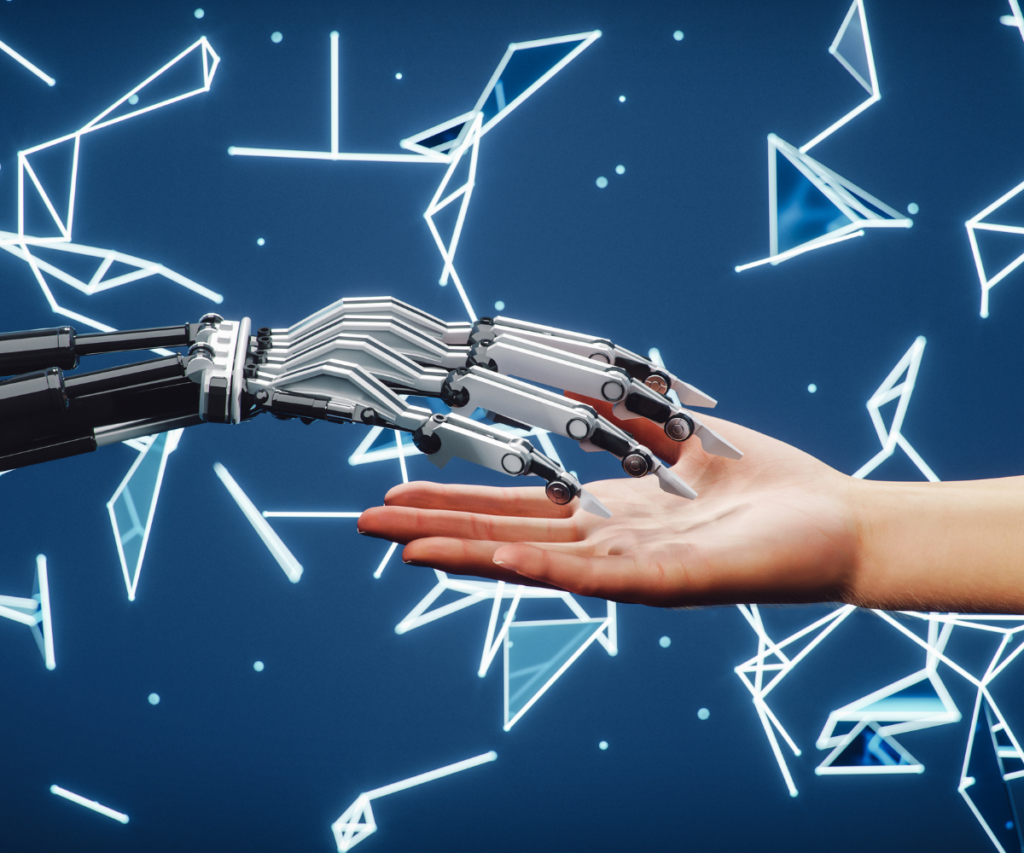
There is a particular kind of vertigo that comes not from falling, but from watching the ground rise to meet you. This is the vertigo of the human resources professional in 2025. A practitioner whose entire vocational identity was forged around a singular, unchallenged premise: that people are the irreplaceable centre of every enterprise. That premise is no longer unchallenged. It is, in fact, the very premise that an entire ecosystem of technology is quietly, methodically, and brilliantly dismantling. And unlike most disruptions that announce themselves with noise and warning, this one has arrived with the composure of a long-tenured employee who has quietly learned everything about the organization and is now, without apology, running it.
This essay is not a eulogy for the human resources profession, nor is it a breathless manifesto about artificial intelligence. It is something more unsettling and more necessary than either: an honest reckoning with what is actually happening at the intersection of human labour, technological capability, and institutional power as in what must be done, urgently and imaginatively, by those whose charge is the stewardship of human potential.
The Nature of What Has Changed
Consider what happened at IBM between 2016 and 2018. The company deployed an AI-driven system internally, later referenced as its “IBM Watson” talent analytics platform, which could predict with roughly 95 percent accuracy which employees were likely to leave the organization within six months before those employees had any conscious intention of leaving. The system did not ask them how they felt. It read the pattern of their behaviour, the texture of their digital footprint, the velocity of their internal communications, and drew conclusions that the best human manager, armed with decades of relational experience, would have taken months to approach with any confidence. IBM’s Chief Human Resources Officer at the time, Diane Gherson, described it plainly: the machine was not replacing the manager’s relationship with the employee. It was extending the manager’s capacity to act before the relationship had already broken.
That distinction between replacement and extension is where most of the current conversation about technology and people management has stalled. Practitioners are debating the wrong frontier. The question is not whether machines will replace human resource professionals in totality. The question is subtler and more dangerous: at what rate, and in what sequence, are the most cognitively demanding and historically exclusive functions of people management being absorbed by systems that neither tire, nor feel, nor hold political allegiance to any organizational tribe? And once absorbed, what remains and indeed genuinely remains for the human practitioner to own?
The answer, examined without sentiment, is both more and less than the profession has so far admitted. Less, because the administrative, transactional, and increasingly analytical core of HR work through recruitment screening, compensation benchmarking, performance rating calibration, compliance tracking, succession modelling is already being executed by machines with a precision and consistency that human teams cannot match at scale. More, because what is being revealed in the wake of that absorption is a vast and underexplored territory of genuinely human responsibility that the profession has, paradoxically, never quite claimed.
The Archaeology of a Profession
To understand the depth of what is being asked of HR professionals today, one must first understand how narrow the profession’s self-conception has historically been. The modern HR function was not conceived as a strategic discipline. It was conceived as a compliance and welfare mechanism, born in the industrial factories of the late nineteenth century when Quaker companies like Rowntree’s and Cadbury in Britain employed ‘welfare officers’ to manage the physical and moral condition of their workers ensuring they had adequate housing, were not drinking excessively, and were attending church. The underlying logic was industrial: keep the human machine functioning well enough to keep the production machine running.
This origin has never fully left the profession. Even as it evolved through the Human Relations movement of the 1930s, through Peter Drucker’s mid-century articulation of management as a discipline, through the rebranding from ‘personnel management’ to ‘human resources’ in the 1980s, and through the more recent adoption of the term ‘people and culture, the soul of the function has remained essentially custodial. Its primary institutional role has been to manage the relationship between individuals and the organization: to onboard, to administer, to regulate, to counsel, to exit. This is honourable work. But it is not, at its core, strategic work. It is maintenance work. And maintenance work is, historically and inevitably, the first category of work to be automated.
Dave Ulrich, the Michigan professor whose three-legged model of HR as business partner, centre of excellence, and shared services became the structural blueprint for virtually every large HR function in the world from the late 1990s onward, was essentially articulating a vision in which the transactional centre of HR would be systematized, enabling practitioners to move up into more strategic positions. What Ulrich may not have fully anticipated was that the systematization he envisioned would eventually extend upward through the model, consuming not just the shared services tier but the analytical and advisory tiers that were supposed to represent the safe harbour of human irreplaceability.
The Machine Does Not Negotiate with Sentiment
In 2019, Amazon scrapped a machine learning recruitment tool it had been developing internally after discovering that the system had taught itself to penalize résumés that included the word ‘women’ as in ‘women’s chess club’ and had downgraded graduates of all-women’s colleges. The system had been trained on a decade of Amazon’s own historical hiring data. Since Amazon had historically hired more men than women for technical roles, the machine concluded that maleness was a positive signal for technical hiring success and encoded that bias with the efficiency and consistency that only a machine can produce. The humans who had designed the system were mortified. The system itself was indifferent.
This episode is instructive in a way that goes far beyond the obvious lesson about algorithmic bias. It reveals something fundamental about the nature of the technology now entering people management: it is brilliant at learning patterns from historical data, and it is entirely incapable of questioning whether those patterns should be perpetuated. It has no moral imagination. It cannot ask the question that every serious people management professional must be capable of asking, which is not ‘what has been?’ but ‘what ought to be?’
This is not a minor gap. It is the defining gap. And it is the gap into which the human resources profession, if it is to justify its continued existence as a genuinely strategic function, must now pour every ounce of its reinvented energy.
Unilever offers a counterpoint that illuminates the same fault line from the other side. The company famously adopted AI-driven video interviewing at the candidate screening stage, using systems that analysed facial expressions, word choice, and vocal tone to produce a candidate suitability score. The efficiency gains were substantial: the company reportedly reduced the time spent on initial screening by weeks, and widened the demographic diversity of its candidate pool by removing the postcode and pedigree biases of human screeners who gravitated toward familiar-looking candidates. The system was, by measurable outcomes, fairer than its human predecessors in specific, bounded dimensions. Yet Unilever’s people leaders were quick to point out that the system had no capacity whatsoever to assess what happened when a candidate encountered genuine adversity in role, how they built trust across cultural difference, or whether they possessed the particular quality of moral courage that distinguished its best leaders from its technically competent ones. The machine had screened. But it had not yet begun to understand.
The Frontier That Has Not Yet Been Named
What the Unilever and Amazon cases collectively reveal is that the emerging frontier for people management is not the adoption of technology. Organizations have been adopting technology with enthusiasm and, frequently, with insufficient wisdom for the better part of two decades. The frontier is the development of a new category of human expertise: the capacity to govern the interaction between technological capability and human dignity at institutional scale.
This is not a function that any existing technology can perform. It requires simultaneous fluency in the logic of data systems, the ethics of institutional power, the psychology of human motivation, and the political economy of organizational culture. It requires, above all, the kind of judgment that can only be forged through extended, embodied engagement with the complexity of human beings in context of judgment that is not rule-following but wisdom-exercising, not efficiency-maximizing but meaning-generating. It requires, in short, professionals who understand both the machine and the person well enough to stand between them as sovereign translators, not as administrators.
There are early signs of what this expertise looks like when it begins to emerge. At Microsoft, following the integration of AI-powered productivity tools across its workforce, the company’s people function faced a question that no algorithm could resolve: how do you maintain a coherent organizational culture when every individual’s working experience is increasingly mediated by a personalized AI assistant that adapts to their individual style? Culture, at its most fundamental, is built through shared friction and through the common experience of struggling with the same problems, in the same rooms, under the same constraints. When artificial intelligence personalizes away that friction, something essential about collective belonging risks evaporating with it. The people leaders who recognized this were not the ones who had become most proficient with the technology. They were the ones who had the deepest understanding of what culture actually is and how it actually forms. That understanding is not in the software.
The Reinvention That Is Actually Required
Reinvention is a word that gets deployed with alarming frequency and very little precision in discussions about the future of work. In the context of the people management profession, it is typically used to mean one of three things, none of which is adequate to the actual situation. It sometimes means digitization through the adoption of HR technology platforms, the automation of process, the deployment of people analytics dashboards. It sometimes means up-skilling the acquisition of data literacy, the ability to read a regression output and understand what it implies for workforce strategy. And it sometimes means repositioning the argument that HR should have a seat at the executive table, should be treated as a strategic function rather than an administrative one.
All three of these are useful. None of them is the reinvention that the moment demands. What the moment demands is something more fundamental: a reconstitution of the profession’s purpose, identity, and epistemic foundation. The people management profession must stop defining itself primarily in relation to what organizations need from their people, and start defining itself in relation to a deeper and more demanding question: what do people need from the institutions that hold power over their working lives, in an era when those institutions are deploying technologies whose effects on human experience, agency, and dignity are still not fully understood?
This is not a soft or sentimental ambition. It is, in fact, a harder and more rigorous one than anything the profession has previously attempted. It requires HR leaders to develop genuine expertise in the ethics of algorithmic decision-making, in the sociology of human-machine interaction, in the political philosophy of workplace power, and in the organizational design of environments that support human flourishing rather than merely human productivity. It requires them to be able to walk into a boardroom and challenge a technology deployment not on the grounds that it feels wrong, but on the grounds that its second and third-order effects on trust, engagement, psychological safety, and collective capability have not been adequately modelled. It requires them to hold the organization accountable to a standard of human stewardship that the technology itself cannot enforce.
Jacinda Ardern, in one of her later reflections on organizational leadership, observed that empathy is not a soft skill rather it is one of the hardest skills there is, because it requires you to simultaneously hold your own perspective and someone else’s, and make a decision that respects both. The people management profession has always claimed empathy as its territory. It is now being forced to make that claim real, by demonstrating that it can bring that capacity to bear on decisions of genuine institutional consequence, in contexts of genuine technological complexity, at a speed that genuine organizational need demands.
On the Courage Required
None of this reinvention will happen without a quality that is rarely discussed in the HR literature, and that is the courage to be inconvenient. The people management function has, throughout its history, derived its organizational legitimacy primarily from its usefulness to the line and its capacity to solve problems that line managers did not want to deal with, to smooth the administrative surfaces of organizational life, to absorb the friction of the employment relationship so that the business could focus on the business. This positioning has been, in one sense, entirely pragmatic. In another sense, it has been the source of the profession’s deepest vulnerability, because it made HR perpetually dependent on the goodwill of those it served rather than the authority of its own expertise.
The reinvention that is now required demands a different posture. It demands that people management professionals be willing to interrupt the deployment of a technology whose human consequences have not been adequately examined. It demands that they be willing to tell a CEO that a workforce reduction enabled by automation, while financially sound in the short term, will exact a cultural cost that will take years to rebuild and is not accounted for in the business case. It demands that they be willing to insist, in the language of organizational strategy rather than human sentiment, that there are dimensions of the human experience at work that cannot be optimized away without destroying the very substrate of creativity, commitment, and collective intelligence that gives the organization its competitive advantage.
This is not an argument for technological resistance. The organizations that will navigate this transition most successfully will be those whose people leadership is most deeply and fluently engaged with the possibilities of the technology and most capable of identifying where machine intelligence genuinely outperforms human judgment, and most capable of creating the conditions under which human intelligence can do what it alone can do. The courage required is not the courage to resist the future. It is the courage to insist that the future be worthy of the people it contains.
The Stakes, Plainly Stated
At the World Economic Forum in Davos in January 2020, three months before a global pandemic would accelerate every trend this essay has described by approximately five years, Klaus Schwab observed that the challenge of the Fourth Industrial Revolution was not technological mastery but human preparedness in the form of the question about whether human institutions could evolve their capacity for wisdom at anything approaching the rate at which technology was evolving its capacity for capability. He was speaking to heads of state and chief executives. He was, in essence, describing the core challenge of the people management profession.
The stakes of getting this wrong are not abstract. When organizations deploy performance management systems that reduce human beings to algorithmic scores without the wisdom to understand what those scores actually measure and what they leave out, they erode the sense of meaning and fairness that is the psychological foundation of sustained human contribution. When they use surveillance technologies to monitor remote workers without understanding that surveillance and autonomy are in fundamental tension, and that sustained performance requires autonomy, they purchase short-term visibility at the cost of long-term capability. When they automate the most repetitive elements of knowledge work without investing in the development of the higher-order capacities that the automation is supposed to free people to exercise, they produce not empowerment but anxiety and a workforce that has been partially displaced but not genuinely elevated.
These are not hypothetical risks. They are documented realities in organizations across every sector and every geography. They are the costs being paid right now by organizations whose technology adoption has outpaced their people leadership wisdom. And they are the costs that a genuinely reinvented people management profession and one that has done the hard, courageous, rigorous work of reconstituting its purpose is uniquely positioned to prevent.
The Human in the System
In 2023, researchers studying the deployment of AI writing assistance tools in a major professional services firm made an unexpected discovery. The employees who used the AI tools most effectively and who produced the highest quality outputs, who were rated most favourably by clients, who demonstrated the strongest performance gains, were not those with the highest AI literacy scores. They were those with the strongest sense of their own professional identity: people who knew, with clarity and confidence, what they stood for, what their distinctive contribution was, and what they were using the tool to express rather than to replace. The technology amplified what was already there. Where what was already there was thin or uncertain, the technology produced volume without substance.
This finding is, in miniature, the entire argument of this essay. Technology does not create human excellence. It reveals it, amplifies it, or when human leadership fails in its fundamental responsibility, quietly substitutes for it with something that looks similar but is, in its essence, entirely different. The people management profession exists, ultimately, to ensure that what technology reveals and amplifies is genuinely excellent rather than merely efficient, genuinely human rather than merely functional, genuinely worthy of the civilization that created both the technology and the people it now governs.
That is not a small purpose. It is not a purpose in decline. It is, in fact, the most consequential purpose the profession has ever been given. What is required now is the clarity to see it, the courage to claim it, and the relentless intellectual rigour to earn it.
About the Author
Dr. Charles Obiajulu Ugwu is a Human Resource Consultant and Contrarian thinker writing from Lagos
