
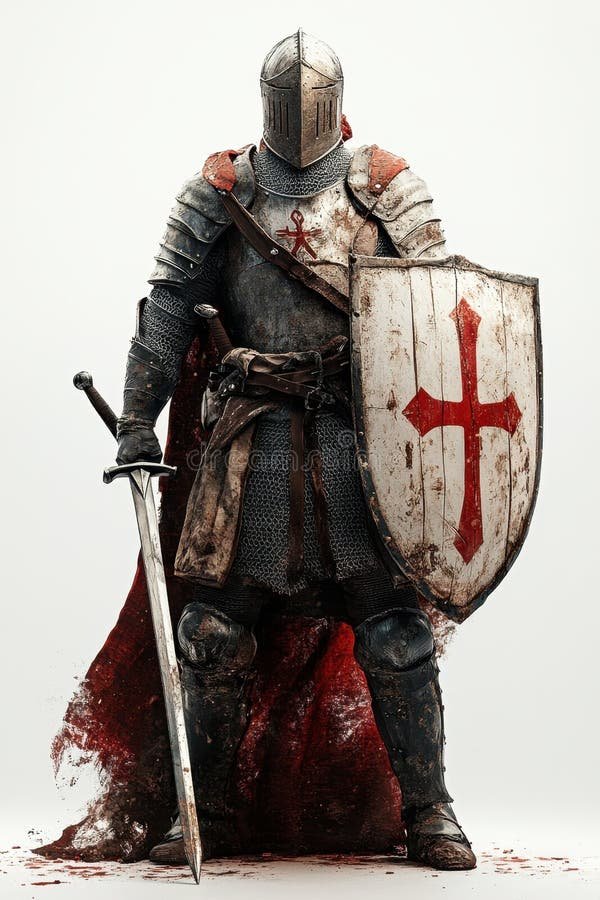
There was a time when becoming a Knight of the Catholic Church meant you had first wrestled with your catechism, lost sleep over Scripture, knelt long enough to know the smell of incense by heart, and learned that a rosary is not a fashion accessory nor a spiritual necklace interchangeable with any other religious beads on the market. Today, however, a troubling question echoes from parish halls to WhatsApp groups, from cathedral grounds to Facebook timelines: “Is Catholic Knighthood now bought by bank transfer?”
The viral video of a Knight publicly denouncing his Catholic faith during the dedication of the Cathedral of Nnewi did not scandalize because a man lost his faith. Faith crises are human and saints have had them. The scandal lies elsewhere. It lies in the shocking realization that a man clothed in ecclesial armour could be so naked in theological understanding. When a Knight cannot distinguish between a Catholic chaplet and an Islamic tasbih, one is tempted to ask: Was the interview conducted in the sacristy or at the ATM?
Theologically speaking, the Catholic Church does not confer honours as decorative medals for financial generosity. Knighthood is not a “thank you for roofing the parish” badge. It is a public ecclesial vocation, a sacramental sign (not a sacrament) of mature faith, moral integrity, doctrinal soundness and visible Christian witness. A Knight is meant to be Miles Christi (a soldier of Christ). Soldiers are trained, they know their uniform, they recognize their weapons, and they do not confuse the enemy’s flag with their own regimental insignia. If a Knight cannot explain the Rosary, the Eucharist, or Marian devotion, then we have not invested a Knight, we have costumed a donor.
Pastorally, the Church in Nigeria must admit a painful truth: financial desperation has sometimes replaced spiritual discernment. We have slowly baptized the dangerous theology that says, “He may not know the Creed, but he knows the contractor.” Thus, some Knights know the cost of marble tiles better than the cost of discipleship. They can fund a cathedral but cannot defend the faith inside it. And when such a man finally discovers that Catholicism demands more than public recognition and front-row seating, he revolts, not against corruption, but against the faith itself.
On a very serious note, if a Catholic Knight mistakes a Catholic chaplet for Islamic prayer beads, it is not an interreligious achievement, it is catechetical malpractice.
It means we have men wearing swords who were never taught which direction the battle faces.
Historically, knighthood emerged to defend the faith, the vulnerable, the truth, not diocesan building projects. A Knight who does not pray, does not study, does not submit to Church teaching, but only signs cheques, is not a Knight. He is a sponsor in armour. And when such armour cracks publicly, the Church bleeds credibility.
Candidly, the Church must restore catechesis before coronation. If there is no theological formation, there should be no knighthood. Also, generosity must be separated from titles while donations should be acts of charity not entrance fees. Public faith requires private conviction. A man who cannot defend the faith should not represent it publicly. Above all, clergy must resist pressure and
the Church must not sell honour to survive. Survival without integrity is already death.
The Church does not need rich Knights who do not believe. She needs believing Knights even if they are not rich. Because when the armour is gold-plated but hollow, it makes a loud noise when it falls. And when a Knight denounces his faith, the tragedy is not that he spoke, it is that he was never properly formed to speak in the first place. Let us stop enrolling wallets and start forming witnesses. For the Kingdom of God is not funded by ignorance, and the Cross is not for sale.
Culled
