
On the morning of 5 December 1885, when the River Niger carried the small vessel bearing Fr. Joseph Lutz, Fr. Horne, and Brothers Hermas and Jean-Gotto toward the rising banks of Onitsha, none of them could have known they were sailing into the heart of a story that would outlive them. History remembers their arrival as an event; faith remembers it as a visitation.
The river that bore them had carried traders, soldiers, explorers, and artisans, but on that day it bore something else entirely—four Spiritans who believed that the Gospel could take root wherever the river went. Their journey, described in missionary records as “nine days of painful travel” up the Niger, was a spiritual ascent into uncertainty, a pilgrimage into a land whose language, customs and traditions they did not yet understand.
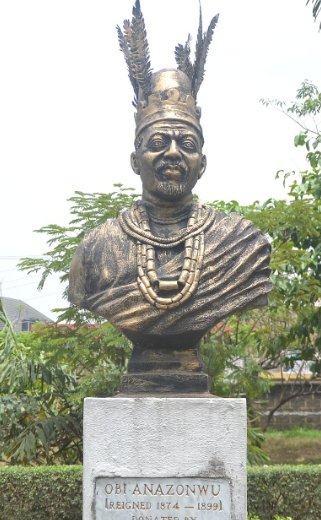
Obi Anazonwu, the traditional ruler of Onitsha at the time, received them warmly. In a moment that feels almost liturgical in hindsight, land was granted to them—a gesture of welcome that mirrored Abraham’s receiving of divine travelers.
Part of the land had earlier been given to the Anglican Church Missionary Society, and through an extraordinary act of Christian fraternity, CMS leaders—whose mission also traced back to Bishop Samuel Ajayi Crowther—allowed the Spiritans to settle on the portion closest to the river. The words attributed to Crowther in that gesture, “Take it, I acquired the land for the cause of God,” remain one of the most luminous ecumenical moments in Nigeria’s mission history.
With the generosity of the Obi and the cooperation of fellow Christians, the Spiritans turned immediately to the task they believed would soften the soil for the Gospel: education. They told the king they had come “to open a school, to teach your children, and all who may wish, to learn knowledge from white men of Europe.” In a small structure with clay walls and river-borne breezes, the first Catholic school opened with about forty children.
Many were redeemed slaves, orphans or children rescued from various hardships; those whom society had set aside, but whom the missionaries believed God had placed at the centre. There is a theological beauty in that: the first fruits of the mission were not the powerful but the vulnerable, the ones Jesus called “the least of these.”
Inside that tiny school, Fr. Lutz taught music, Fr. Horne taught writing and numbers, and the brothers introduced the children to order, craftsmanship, and the structure of learning. In time, they added carpentry, shoemaking, and other crafts.
Their approach reflected a conviction that the Gospel is not only preached but also built into hands, minds, and habits; that evangelization is as much about human formation as sacramental preparation. They were, in the deepest sense, evangelists of the whole person.
Yet the work of evangelisation was far from rosy.
The missionaries faced a linguistic barrier that forced them into humility; they became immersed in cultural worlds where reverence, kinship, tradition and ritual were tightly woven together. They lived alongside the Church Missionary Society, at times in tension, at times in unexpected cooperation. Disease stalked them relentlessly. Historical accounts speak of the “roll-call of death” that marked the early years of the Holy Ghost fathers in the region—men who came joyfully and died quietly, one after another, consumed by fevers they had no medicine to resist.
Their mortality rate was so high that it seemed almost reckless to continue the mission. However, their letters to their home country did not reveal fear but a strange calmness, a surrender to the possibility that their lives were seeds and not monuments.
Among their earliest pupils and converts were children who would later become catechists, teachers, and pillars of Christian villages established to nurture new believers. These converts were ordinary people, yet the Spiritans wrote about them with the tenderness of shepherds who saw in each soul a reason the voyage had been worth the cost. Their names are often lost in the shadows of history, but their faith was the bridge between the first arrival in 1885 and the flourishing Catholic life that would later define Onitsha and its environs.
Looking back, there is something sacramental about the river scene of December 1885. Water carried the missionaries into Igboland, just as water would later carry thousands into the Church through baptism. The River Niger was their Jordan, their place of crossing, their entry into a new covenant with a people who would one day become one of the strongest Catholic communities in Africa.
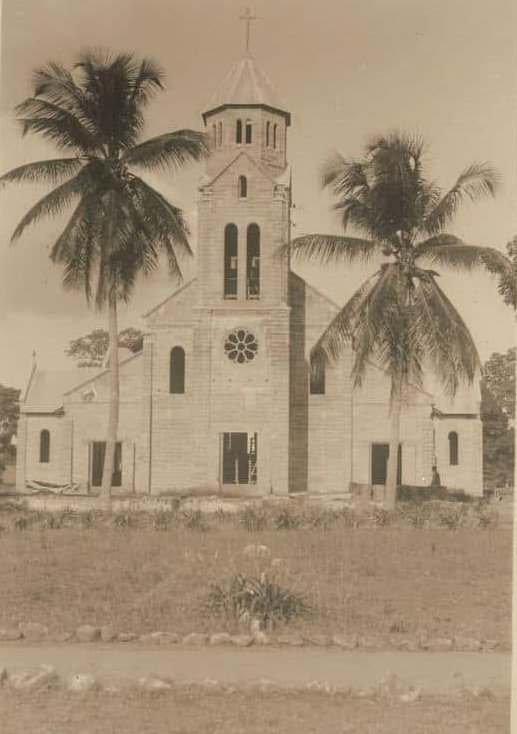
What began as a small mission station would, over the decades, grow into parishes, schools, hospitals, seminaries, and eventually the Cathedral Basilica of the Most Holy Trinity, built on the very land the Obi had given them.
As the Archdiocese of Onitsha marks 140 years since that arrival, we are invited to see the story not as an accident of geography or the product of human courage alone, but as a manifestation of divine timing.
Four missionaries did not bring the Gospel to a “blank space”; they entered a living culture, met a generous monarch, encountered real people with long histories of belief, and found their place within that story. In their journey upriver lie echoes of an older truth: that God’s movements in history often begin quietly, carried not by force or spectacle, but by obedience, vulnerability, and the willingness to step onto unfamiliar soil.
The river bore them, but grace bore the rest.