Here’s a masterclass in positioning risk, playing out in real time in Nigerian politics.
For years, Peter Obi’s most powerful political asset hasn’t been a policy paper. It’s been a perception: extreme personal frugality. In a country exhausted by ostentatious leadership, “the one shoe, one watch” candidate created a sharp, emotionally resonant differentiation — the anti-elite brand, built entirely on visible restraint.
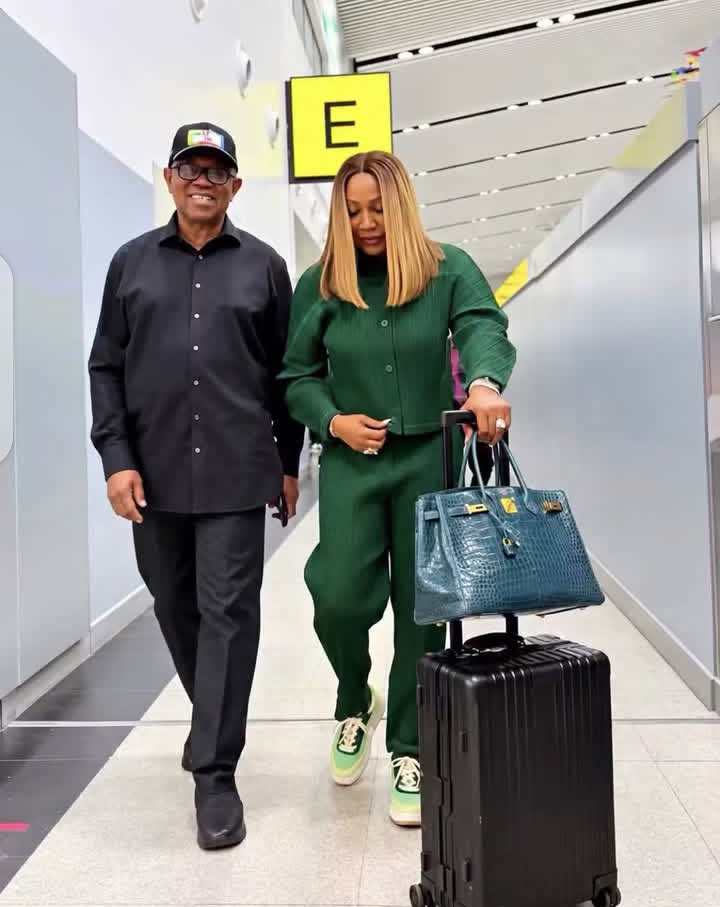
Last week, that brand met its hardest stress test so far. Video footage showing his wife, Margaret Obi, carrying what commentators identified as a Hermès Kelly 35 in Malachite — listed on Hermès’ own site at roughly £132,000, or somewhere between ₦237–250 million depending on the exchange rate used — went viral across Nigerian social media.
Critics, including Wike aide Lere Olayinka and broadcaster Daddy Freeze, wasted no time connecting the bag directly to Obi’s frugality claims. Obi, responding from Washington, D.C., said his wife runs her own business, manages her own income, and that he doesn’t track what she spends.
Factually coherent. Legally unimpeachable. And, from a brand standpoint, almost entirely beside the point.
Here’s why.
A brand built on radical restraint has almost no tolerance for visual contradiction. When the spouse of that brand appears with an item widely perceived — rightly or wrongly, confirmed purchase or not — as extraordinarily expensive, it creates immediate cognitive dissonance.
And here’s the part campaigns consistently underestimate: the public does not neatly separate “his money” from “her money.” They process the couple as a single brand unit. What she carries becomes data about the household’s actual lifestyle, whether that’s fair or not.
This was never really a moral question. Lere’s boss, FCT Minister Nyesom Wike, is known to ride around town in a Rolls Royce. President Tinubu himself vacations routinely in France, not Nigeria, despite repeated public uproar about that choice. So, Obi’s traducers do not come from a position of moral strength.
What Obi has, therefore, is a positioning challenge. The tighter and more absolute a brand’s core claim, the less room it has to absorb any high-visibility signal that cuts against it — even one that’s fully explainable, independently funded, or purchased years before the claim was ever made.
Effective perception management anticipates exactly this risk. Spouses of politicians who campaign on austerity typically receive quiet, deliberate guidance on public optics — especially during a politically sensitive stretch like a presidential run-up.
Whatever the reason, that discipline didn’t hold here, and it handed opponents an emotionally charged talking point that required zero policy argument to land. Notably, even commentators sympathetic to Obi — Linda Ikeji among them — pushed back only on the price estimate, not on the underlying vulnerability the image exposed.
Obi’s defence — she has her own money; I don’t monitor her spending — is a sound legal and personal answer. As a brand answer, it’s incomplete, because it defends the private right while leaving the public perception problem completely unaddressed. In politics, the real contest is almost never over whether someone is entitled to spend. It’s over what that spending is perceived to reveal about authenticity.
The bag itself isn’t the story. The tension it exposes — between a meticulously cultivated frugal brand and the visible reality surrounding the household — is the real story. And that’s the lesson for anyone building a brand, political or commercial: the higher the purity of your positioning claim, the higher the purity of visual consistency it demands from everyone associated with it.
Fall short of that anywhere, visibly, even once, and you haven’t just created a bad news cycle. You’ve handed your opponents a script they didn’t have to write themselves.
*Ken Ihedioha is a media and sales expert based in Lagos.
