

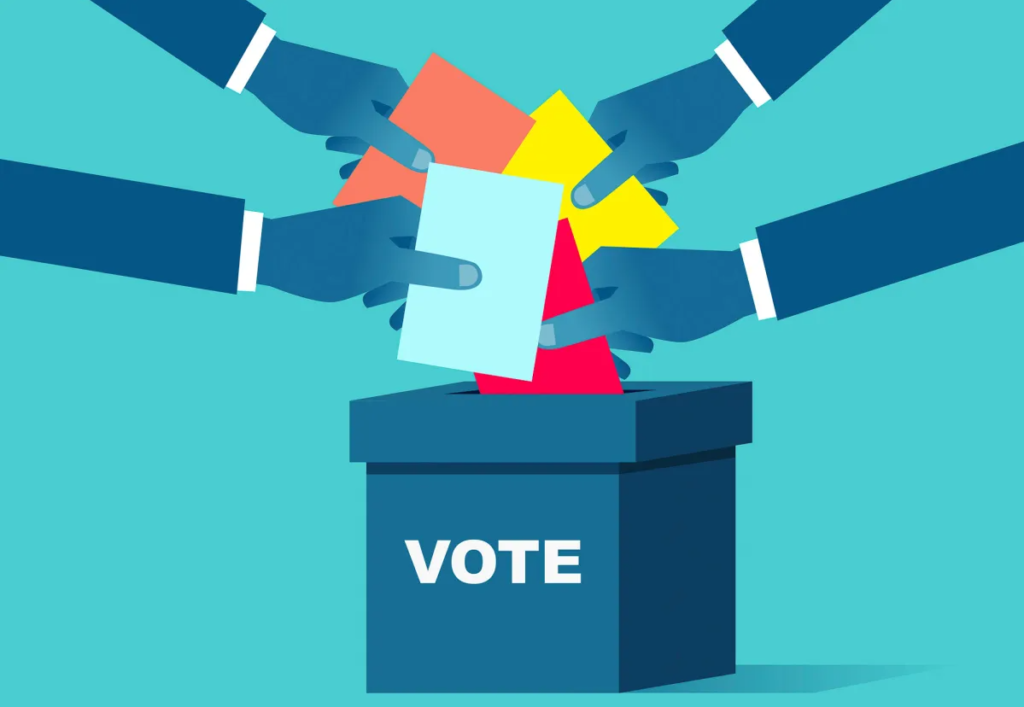
Nigeria’s most recent off-cycle governorship election in Anambra State on November 7 once again laid bare a troubling truth: vote buying remains alive, well, and deeply entrenched in our electoral culture. If it thrives in Anambra — a state known for its high levels of literacy, enterprise, and civic awareness — one can only imagine how pervasive it may be elsewhere as economic hardship tightens ahead of the 2027 general elections.
Faced with this reality, what should we do? Surrender to despair? Accept that elections will always be for sale? This essay offers a practical, community-driven alternative — one that empowers citizens rather than politicians.
A Simple, Replicable Idea: Adopt a Voter
Instead of allowing vulnerable citizens to be cheaply bought by political merchants, I propose that every conscientious, economically stable member of society “adopt” at least three voters. This is not patronage. It is not coercion. It is an act of civic duty, social responsibility, and community service aimed at freeing voters from manipulation.
What does adoption mean in practice?
• Engage them regularly.
• Discuss issues, policies, and candidates in clear, relatable terms.
• Help them with the minimal logistics needed to vote and protect their votes.
• Do not compel them to vote for any candidate. Instead, guide them to vote according to their conscience.
In cases where an adoptee is completely uninformed and vulnerable, it is ethically acceptable to recommend your preferred candidate — but the final decision must remain theirs.
If hundreds of thousands of Nigerians adopt this practice, it will be nearly impossible for any politician to outspend or outmaneuver a motivated, enlightened citizen network working for the public good.
A Case Study: Abia State
Registered voters in 2023: 2,120,808
Projected registered voters in 2027: approx. 2.7 million
Imagine 600,000 civic-minded Abians each adopting just three voters. That produces 1.8 million sensitized voters, most of whom would ordinarily be prime targets for vote buyers.
Add the 600,000 adopters, and you have a potential 2.4 million–strong voting bloc — enough to decisively swing any election toward credible candidates and away from corrupt power brokers.
How Voter Adoption Works
“Adopting” a voter simply means engaging them in ongoing civic education and cultivating a habit of informed political participation. The overall goal is to dismantle the ignorance that politicians exploit.
Here are practical steps:
1. Choose your community of origin or your community of residence. Adopt at least three voters around you.
2. Invite them occasionally to your home or meet in informal, friendly settings.
3. Offer simple hospitality; build trust.
4. Share your message while maintaining a relaxed atmosphere.
5. If distance is an issue, use WhatsApp or similar platforms to sustain the relationship.
6. Explain how good voting decisions lead to better policies and better leadership.
7. Help them understand that selling their vote is selling their voice — and ultimately their future.
8. Show how desperate politicians often resort to violence and corruption to secure power.
9. Discuss their perception of government and assess their political awareness.
10. Educate them about their rights as citizens and the power of their vote.
11. Make clear that individually and collectively, citizens can change the direction of governance.
12. Emphasize that a vote cast in good conscience is a cure for many societal ills — from injustice to poverty.
13. Encourage them to see themselves as ambassadors of good governance – not victims or servants of people in government.
14. Teach them to speak up, ask questions, and demand accountability.
15. Reinforce that a principled conscience is priceless.
16. Explain how violent politicians and those who enable them undermine society.
17. Highlight that politics responds to the collective will of the people.
18. Clarify that true empowerment is not handouts but honest leadership and responsible governance.
19. Illustrate how bad leadership has damaged education, healthcare, and public infrastructure.
20. Show the direct link between bad voting choices and unemployment, insecurity, and economic stagnation.
21. Finally, teach them that while they may accept money from politicians — since the money is theirs anyway — they remain free to vote according to conscience without fear of spiritual or moral consequences.
Social media has made communication cheap and easy. Every voter is just a phone call or text message away. Instead of complaining about the system, we can influence it — one voter at a time.
Talk is cheap. Adopt a voter today and let real change begin with you.
Chijioke H. Orji, Esq., is an Abuja-based lawyer, Notary Public, writer, publisher, and social entrepreneur.