

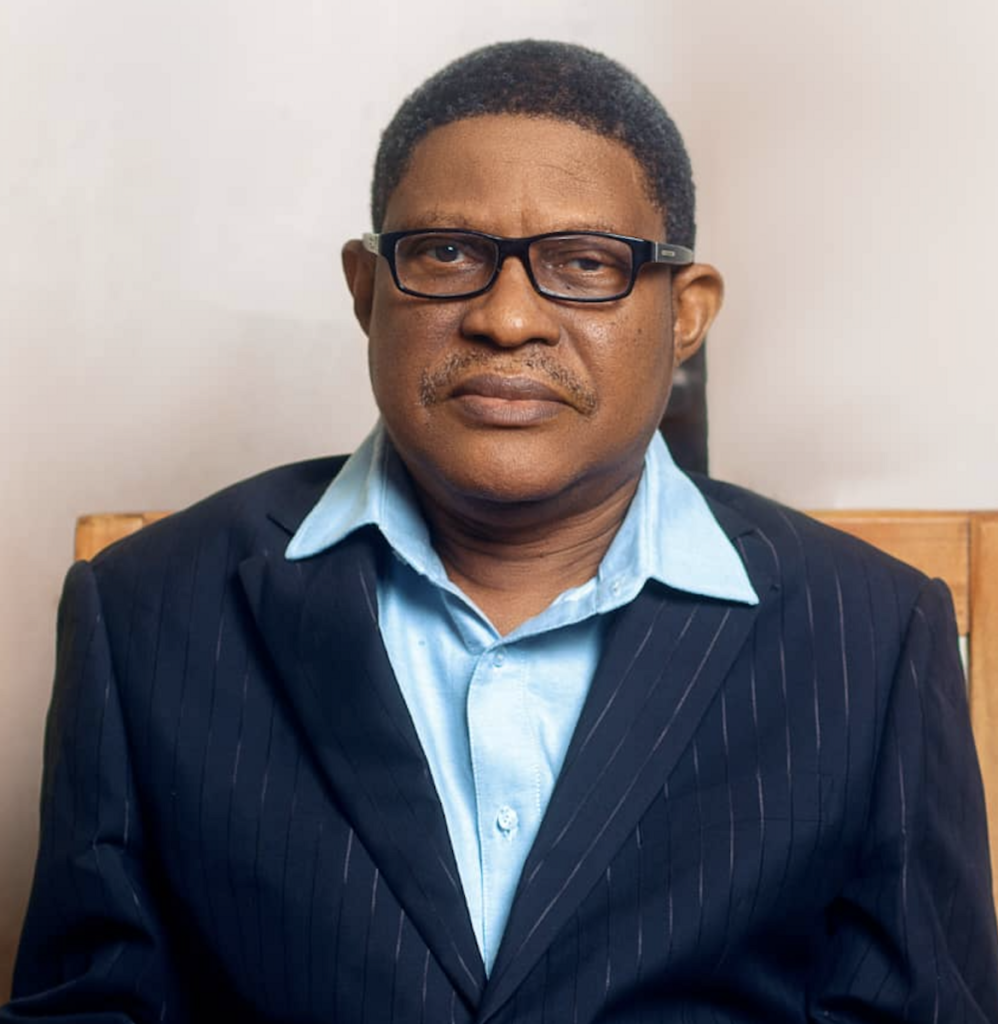
On Thursday, December 11, 2025, I received a call from my longtime friend and brother, Professor Achike Agbakoba. He was calling to let me know that he had sent me a document via WhatsApp. It was a keynote paper he had delivered months earlier at a conference of African philosophers in Yaoundé, Cameroon.
He explained that the paper had been written for a strictly academic audience and would need reworking for a broader, non-specialist readership. He asked for my help in reshaping it into a newspaper or magazine article. As he spoke, his voice sounded unusually frail. Carefully—almost laboriously—he outlined a few thematic perspectives he wanted emphasized.
Then came the words that took the wind out of me: “…I would have loved to do this myself, but my health no longer permits.”
It was the first time in more than a year of illness that Achike admitted—openly and without deflection—that failing health had constrained his ability to do what he loved most: cracking abstract ideas open to extract meaning, instruction, and benefit for humanity. Until then, he had insisted at every contact that he was “getting along quite well”—his favorite refrain.
When the call ended, I hung my head in fear and denial. The weight of that admission broke my heart. That night was one of the most miserable of my adult life.
Two weeks later, Professor Achike Agbakoba drew his final breath at the National Orthopaedic Hospital, Thinker’s Corner, Enugu, surrounded by his loving family. There is a quiet poetry in the fact that a man who devoted his life to philosophy spent his last days at a place called Thinker’s Corner. Family members say he was completely at peace in his final moments and, as a devout Catholic, had received the sacraments.
What, then, occupied the mind of Achike Agbakoba—a professional thinker—as he fought for life and perhaps realized he might not survive this time? Beyond the natural anxieties of mortality, it is clear to me that he was deeply troubled by the condition of his country, his countrymen, and Africa as a whole. That concern explains both the urgency of his call and the document he sent barely two weeks before his appointment with the Almighty.
The core arguments of that paper—his philosophical last will, in a sense—are what I have attempted to capture below. I do so with a sense of duty and humility, knowing that no retelling can fully do justice to the man or the ideas that rightly belong to him.
The Problem
First, Agbakoba argued that the vast majority of Africa’s postcolonial political class have governed so poorly, and with such distorted attitudes toward public service, that they deserve neither the title of leaders nor that of elite. Leadership, he insisted, is fundamentally about an alignment of vision between the leader and the led. Elites, by the same token, are meant to represent the most refined, enlightened, and exemplary elements of a society.
By these standards, Africa’s ruling classes—those who took over from European colonizers—failed on both counts. They neither shared a common vision with their peoples nor embodied superior moral or intellectual refinement. It was therefore more accurate, he argued, to describe them as “mis-leaders”—because they have truly misled Africa backwards.
This failure stands in stark contrast to the experience of much of Asia, whose political elites managed to steer their societies toward productivity and progress despite emerging from a similar background of European colonization.
According to Agbakoba, part of the explanation lies in the divergent paths taken after independence. While much of Africa’s political class chose to confront and reject the colonial experience ideologically, their Asian counterparts largely chose pragmatic adaptation.
In Africa, this ideological confrontation manifested initially as a rejection of capitalism—still the most effective system humanity has devised for organizing science, innovation, and large-scale production—and a turn toward hastily assembled indigenous ideologies. In Kenya, Jomo Kenyatta advanced Harambee (“all pull together”), while in Tanzania, Julius Nyerere developed Ujamaa, a system of village cooperatives grounded in communal brotherhood.
The trouble, Agbakoba observed, was that while these ideologies offered useful frameworks for wealth redistribution and relative social equity, they proved abysmal at motivating science, creativity, enterprise, and productivity at scale.
Soviet-style socialism, to which some African states gravitated, suffered similar defects. In effect, Africa chose systems efficient at distributing and redistributing poverty—but not at creating wealth.
Compounding this ideological error were the twin pathologies of greed and corruption. As the political class busied itself sharing offices, lands, and privileges vacated by European colonizers, African societies slid into decay and disorder. In the process, “leaders” lost the trust and respect of their people—the true foundations of political legitimacy.
The Way Forward
True to his vocation as a practical philosopher, Achike Agbakoba did not stop at diagnosis. He offered prescriptions, encapsulated in the Theory of Transcolonialism. .
Developed by scholars working in literary and postcolonial studies—most notably Françoise Lionnet and Shu-mei Shih—Transcolonialism emerged in the 1990s as a critical framework for understanding the complex, multidirectional flows of culture and power across colonial contexts: pre-colonial, colonial, and post-colonial. Like a physician in search of a cure for a troubled patient, Agbakoba discerned in this theory the promise of a healing medicine for Africa. He appropriated it, recalibrated it, and domesticated it—transforming Transcolonialism into a distinctive instrument of African political philosophy.
At its core, Agbakoba’s Transcolonialism argues that Africa—and any society seeking to prosper—must adopt a calm, unemotional, long-term view of its historical experiences. Societies should selectively harvest what is best from their precolonial, colonial, decolonial, and postcolonial encounters to create superior hybrid systems—capable of advancing both wealth creation and wealth distribution, and even leapfrogging former colonizers. His books, journal articles and lectures often pulsated with this conviction.
This approach requires abandoning reflexive anti-colonial antagonism and resisting the pull of both rigid traditionalism and once-fashionable socialist orthodoxies. Instead, the colonial experience should be treated as a bitter but useful pill for innovation—much like the painful discipline an athlete endures to refine body and mind for higher performance.
For instance, Agbakoba argued that Africans should stop lamenting the imposition of European languages under colonial rule or retreating into linguistic isolation. Rather, multilingualism should be embraced as a strategic advantage—granting access to Euro-Western worldviews while enabling Africans to compare, filter, and synthesize what is best from indigenous, Western and other traditions worldwide.
As he memorably put it:
“Africa paid for the knowledge, skills and values to which she was exposed in the colonial era with her blood and suffering; consequently, all such knowledge, values and skills—including the languages of the colonial powers—legitimately belong to Africa.”
He further observed that political independence marked a historic inflection point that opened vast developmental possibilities—possibilities squandered by the failure to reset agency and mindset afterward. What Africa needs, he argued, is a transition from the protest-driven, oppositional mode of anti-colonial struggle to a conciliatory, pragmatic, and fusion-oriented approach better suited to today’s developmental challenges.
With such insights, Professor Joseph Chukwuemeka Achike Agbakoba earned his place as one of Africa’s most respected thinkers and as the leading proponent of Transcolonialism. He embodied, in rare combination, the qualities of psychologist, therapist, priest, idealist, pragmatist, and sage. He understood that no experience—sweet or bitter—is ever wasted. It can become either fuel for destruction or energy for propulsion.
His life’s work was devoted to transforming Africa’s chequered history into fuel for renewal and advancement.
But is the mother continent listening?
Or is she too consumed by the daily struggle for survival to hear the voice of her philosophers?
Victor Anazonwu is a member of The Renaissance Online Magazine Editorial Board.